Data Recovery Portsmouth — Hard Drives, SSDs, RAID, SD Cards & Flash
Clicking drive, dead SSD, deleted files, corrupted RAID, snapped SD card — your data is not necessarily gone. We recover data other companies can't. In-house recovery from £69.95. Cleanroom available. Portsmouth-based engineers.
0+
Years Experience
0%
Success Rate
£0
From (in-house)
£20
Diagnostics
Fast Track: Same-day turnaround
Fast. Reliable. 6-Month Warranty.
All repairs include
6-Month Warranty ✓
Google Reviews
4.6 ★ Rated
If In-House Fails
No further charge
From £69.95
In-house recovery
Cleanroom Available
Mechanical HDD recovery
Portsmouth-Based
Bring it in today
Data Recovery Services Portsmouth
We recover data from every type of modern storage device — whether it's a mechanical hard drive with failed heads, an SSD with a dead controller, a corrupted RAID array, or a snapped SD card. Same Portsmouth team. Same commitment: if in-house recovery is attempted and fails, you are not charged for the recovery attempt — only the £20 diagnostic inspection.

Hard Drive (HDD) Recovery
Mechanical hard drives fail in several ways — clicking or grinding noises indicate failed read/write heads; silent drives may have seized spindle motors or damaged PCBs. We handle all failure types including cleanroom head swaps for physical damage.
- All brands: Seagate, WD, Toshiba, HGST, Samsung
- Laptop 2.5" and desktop 3.5"
- Logical & physical recovery
- Cleanroom available for head swaps

SSD Data Recovery
SSDs store data on NAND flash chips managed by a controller. When the controller fails — often silently, with no warning — the drive simply stops responding. SSD recovery is an electronics discipline: we access the raw NAND chips to retrieve data when the controller cannot.
- SATA SSD, M.2 NVMe, M.2 SATA
- MacBook SSD recovery
- All brands: Samsung, Crucial, WD, Kingston
- Chip-level NAND recovery
RAID & NAS Recovery
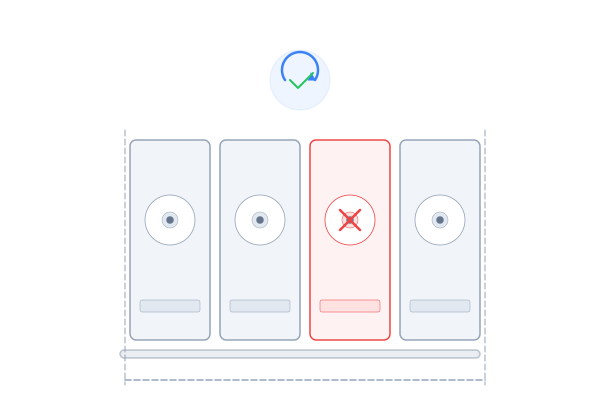
RAID arrays and NAS devices protect against single drive failure — but not against multiple simultaneous drive failures, controller failure, accidental rebuild errors, or ransomware. We reconstruct the RAID configuration and recover the data from the individual drives.
- RAID 0, 1, 5, 6, 10
- Synology, QNAP, Buffalo, Drobo NAS
- Server RAID recovery
- Virtual drive & VMDK recovery

SD Card & Flash Recovery
SD cards, microSD cards, Compact Flash, and USB flash drives all use NAND flash memory. Despite their rugged reputation, they fail — often from physical damage, accidental format, or NAND wear. We recover from physically broken cards and logically corrupted ones.
- SD, SDHC, SDXC, microSD
- CompactFlash, XQD, CFexpress
- USB flash drives & memory sticks
- Camera & drone card specialists

Phone & Tablet Recovery
Modern phones store photos, messages, and files on internal NAND flash that is often soldered directly to the motherboard. Water damage, screen failure, or a dropped phone can render the device inaccessible — but the data may still be intact at chip level.
- iPhone & iPad recovery
- Android phone & tablet recovery
- Water damaged devices
- Photos, messages, contacts, videos

Deleted Files & Logical Recovery
Accidentally deleted files, accidental format, corrupted file system, virus damage, or a failed Windows/Mac update can make files disappear even on a physically healthy drive. These are logical faults — and often the best chance for a clean recovery.
- Accidental deletion recovery
- Formatted drive recovery
- Ransomware & virus damage
- Windows, macOS, Linux, NTFS, FAT32, exFAT
Why Choose Our Data Recovery?
Your data stays in Portsmouth. We never send your drive to a third party — all recovery work is done in-house at our Durham Street workshop. Free assessment, no obligation, and you only pay if we recover your data.
All Drive Types
Hard drives (HDD), solid state drives (SSD), NVMe, RAID arrays, SD cards, USB flash drives, and mobile phones. We recover from all of them — whether it's accidental deletion, partition corruption, or a mechanically failed drive.
Confidential & Local
Your data never leaves our workshop. No posting drives to distant labs, no third-party access. We sign an NDA on request, and all recovered data is returned on an encrypted USB drive.
Clean Room Ready
For mechanically failed drives, we have a clean bench environment for head stack replacement and platter swaps. We don't attempt risky procedures without the right equipment — your data is too important for guesswork.
No Data, No Fee
Free assessment, fixed-price quote before we start, and you only pay if we recover the data you need. If we can't recover it, you don't pay — simple as that. No hidden charges, no recovery-at-all-costs pricing.
Emergency Service
Lost data at 3am on a Sunday? We offer emergency same-day assessment for critical situations. Businesses across Portsmouth trust us when the RAID array fails or the backup turns out to be empty.
Drop In or We Collect
Bring your drive to our Durham Street workshop, or we'll collect it from anywhere in the PO postcode area. Students at the University of Portsmouth get a discount, and we've recovered many a dissertation from a failed laptop drive.
How Data Recovery Works
Free Assessment
Bring your drive to our Portsmouth workshop or arrange collection. We assess the fault, determine what's recoverable, and give you a fixed-price quote. No obligation to proceed.
Recovery
We clone the drive (where possible), repair logical errors or replace failed components, and extract your data. The process can take from a few hours (logical recovery) to several days (mechanical failure with clean room work).
Data Return
We verify the recovered files with you, then transfer them to an encrypted USB drive. You check everything's there before you pay. If we can't recover the data you need, there's no charge.
How Data Recovery Works
Understanding the difference between failure types helps explain why some recoveries cost more than others — and why acting quickly always improves the outcome.
Logical Failure
The drive or device is physically fine but the data structure is damaged — deleted files, formatted partitions, corrupted file systems, or failed OS updates. The data is still physically present on the storage medium; it just can't be found through normal means.
Recovery outlook: Excellent
High success rate · From £69.95 · In-house · Fast turnaround
Electronic / Firmware Failure
The PCB (circuit board) has failed — from power surges, component failure, or firmware corruption. The drive won't spin up or be detected by a computer. For SSDs, a failed controller chip means the NAND flash chips hold the data but can't be accessed normally.
Recovery outlook: Good
Good success rate · From £69.95 · May require specialist tools
Mechanical Failure
Internal components have physically failed — the read/write heads have crashed onto the platters (causing clicking/grinding), the spindle motor has seized, or the platters are physically scratched. Opening the drive and replacing internal components must be done in a cleanroom to avoid contamination.
Recovery outlook: Varies
Cleanroom required · Priced on inspection · Act immediately
Our Recovery Process — From Drop-Off to Data
Bring It In
Drop off your device at our Portsmouth office or post it to us. We handle it with care from the moment it arrives.
£20 Diagnostic
We assess the device, identify the fault type, confirm whether recovery is possible, and give you a firm fixed-price quote. No hidden costs.
Recovery
We recover your data using specialist hardware and software tools — in-house for logical/electronic faults, cleanroom for mechanical HDD issues.
Verification & Return
You verify the recovered files before we charge the recovery fee. Returned on USB drive or uploaded to a secure link. No data = no charge.
Data Recovery Pricing Portsmouth
We believe in being completely upfront about what everything costs before we do anything. Here is exactly how our pricing works — step by step.
How the Costs Work — Step by Step
Diagnostic
£20
Non-refundable. Covers expert assessment of your device — fault type identified, recovery path confirmed.
In-House Recovery
From £69.95
Covers the vast majority of cases. Logical faults, SSDs, deleted files, corrupted drives, SD cards, USB drives. If unsuccessful — no recovery charge.
Cleanroom Dispatch
£80
Only for mechanically failed HDDs requiring cleanroom. Covers preparation & dispatch to our specialist partner. You receive a full file listing before any further charge.
Cleanroom Quote
Specialist Priced
After reviewing your file listing, you approve the cleanroom recovery quote. If you can't see the files you need — we can request a rescan before you commit.
Step 1 — Diagnostic
flat fee · all devices · non-refundable
- Full expert fault assessment
- Logical, firmware, electronic or mechanical fault identified
- In-house vs cleanroom decision confirmed
- Clear written quote provided before anything begins
Step 2a — In-House Recovery
starting price · confirmed after diagnostic
- Deleted files, formats, corrupted drives
- SSDs, SD cards, USB drives, flash storage
- Firmware & electronic faults
- 1–3 working days typical
- If unsuccessful — no recovery charge. Just the £20 diagnostic.
Step 2b — Cleanroom Route
dispatch fee + specialist quote on file listing
- Clicking / grinding hard drives
- Failed read/write heads & platter damage
- Full recoverable file listing returned to you
- You approve the specialist quote after reviewing your files
- Rescan available if needed before you commit
Key Points — Read Before You Bring Your Drive In
- All prices exclude VAT
- The £20 diagnostic is non-refundable — it is the cost of the professional inspection
- If in-house recovery is attempted and fails, you pay nothing beyond the £20
- Cleanroom route requires an additional £80 dispatch fee before the drive is sent
- Cleanroom specialist provides a full file listing — you see what's recoverable before agreeing
- A rescan can be requested before committing to cleanroom recovery
- Emergency priority turnaround available — contact us to discuss
- RAID and NAS recovery priced individually — contact us for a tailored quote
Data Recovery FAQ — Portsmouth & Hampshire
Every question Portsmouth and Hampshire customers ask us about data recovery — answered honestly and in full.
How much does data recovery cost in Portsmouth?
There is a fixed £20 non-refundable diagnostic fee for all devices — this covers the expert inspection. In-house recovery (which covers the majority of cases including deleted files, SSD faults, corrupted drives, and SD cards) starts from £69.95. For mechanically failed hard drives requiring cleanroom recovery, there is an additional £80 dispatch fee followed by a specialist quote based on the file listing. You always know the full cost before you commit to anything.
What is the £20 diagnostic fee and is it refundable?
The £20 diagnostic fee is non-refundable. It is the cost of having one of our engineers professionally assess your device — identifying the exact fault type, confirming whether recovery is feasible, and determining whether it can be handled in-house or requires specialist cleanroom recovery. This fee is charged regardless of the outcome of the assessment. You will always receive a clear written explanation of what we found before any further costs are discussed.
Do I pay if the in-house recovery doesn't work?
No. If we attempt in-house recovery and it is unsuccessful, you will not be charged for the recovery attempt itself — only the £20 diagnostic fee. The vast majority of recoveries are completed in-house, so this scenario is uncommon, but our commitment is clear: if we can't get your data back in-house, we don't charge you for trying.
What happens if my drive needs cleanroom recovery?
If the diagnostic confirms your hard drive has a mechanical failure requiring a dust-controlled cleanroom environment, we will explain this clearly. There is then an £80 preparation and dispatch fee to have your drive professionally processed and sent to our specialist cleanroom partner. Once the cleanroom team has worked on your drive, you will receive a full listing of every recoverable file — you can review exactly what data is available before committing to the full recovery. If you cannot find the files you need in the listing, we can request a rescan of the drive to attempt to locate additional data. You only approve the final recovery quote — and only pay the specialist fee — when you are satisfied with what is recoverable.
My hard drive is making a clicking or grinding noise — what should I do?
Stop using it immediately and do not power it on again. Clicking and grinding are signs of mechanical failure — the read/write heads have typically failed and are making contact with the magnetic platters. Every additional power cycle causes further physical damage to the platter surface, which holds your data. Do not run data recovery software on a clicking drive — this accelerates the damage. Bring it to us at our Portsmouth office as soon as possible. Mechanical recovery is still achievable in many cases, but time and further power cycles are your enemies.
Can you recover data from a drive that is not detected by my computer?
Yes, in most cases. A drive not being detected can indicate several different fault types — a failed PCB (circuit board), firmware corruption, electronic component failure, or in the case of an SSD, a failed controller chip. Most of these faults can be addressed in-house using specialist hardware. The £20 diagnostic will identify exactly which type of fault is preventing detection and confirm the recovery path.
I accidentally deleted files or formatted my drive — is it too late?
Probably not — but stop using the drive immediately. When you delete a file or format a drive, the data is not instantly destroyed. The operating system marks the space as available for new data, but the original data remains until it is overwritten. The more you continue to use the drive after deletion or formatting, the higher the chance of new data overwriting what you need. Bring it to us as soon as possible — the sooner we see it, the better the recovery chances. Logical recoveries like this are among our most successful and typically handled entirely in-house from £69.95.
Can you recover data from a water or liquid damaged device?
Often yes — but the single most important rule is: do not power the device on after water damage. Water itself does not destroy stored data, but powering on a wet device causes electrical short circuits that can destroy components permanently. If your device has been water damaged: remove the battery if possible, do not use a hairdryer or apply heat, seal it in a bag, and bring it to us immediately. We assess water-damaged hard drives, SSDs, laptops, phones, tablets, USB drives and SD cards.
Can you recover data from a dead or broken SSD?
Yes. SSD failures are entirely electronic — there are no moving parts, so failures are caused by controller failure, firmware corruption, power surges, NAND wear, or electrical component failure. Unlike hard drives, SSDs often fail without warning. Recovery typically involves bypassing the failed controller to access the raw NAND flash chips that actually store your data. This is specialist work requiring dedicated SSD recovery hardware, and it is handled entirely in-house from £69.95. We recover SATA SSDs, M.2 NVMe, M.2 SATA, and MacBook SSDs.
Can you recover data from an SD card or USB flash drive?
Yes. SD cards, microSD cards, CompactFlash, XQD, CFexpress and USB flash drives all store data on NAND flash chips and fail in similar ways to SSDs — accidental deletion, accidental format, file system corruption, physical damage to the connector, or NAND wear. We recover from all of these scenarios. For physically broken cards or drives (a snapped SD card, a damaged USB connector), chip-level recovery techniques allow us to access the data directly from the NAND chips even when the device cannot be plugged in normally.
My photos from a wedding / holiday / family event were on the drive — can you get them back?
Photos are among the most common and most important files we recover — and one of the things our engineers care most about getting right. JPEG, RAW, PNG, video files (MP4, MOV, AVI) are all recoverable from healthy to severely damaged media in the right circumstances. Stop using the device immediately, do not take any new photos on the card or overwrite any data, and bring it to us. The sooner we see it, the better your chances. We will always tell you honestly what is and isn't recoverable before you commit to any cost.
Can you recover from a ransomware attack?
It depends on the specific ransomware strain and whether the original files still exist on the drive alongside the encrypted versions. Some ransomware variants delete the originals before encrypting — others do not, meaning the unencrypted originals may still be present on the drive and recoverable using logical recovery techniques. We assess ransomware-affected drives as part of our standard diagnostic. We do not pay ransom demands on your behalf, but we will tell you honestly whether independent recovery without the decryption key is feasible in your specific case.
What is the difference between in-house and cleanroom recovery?
In-house recovery uses specialist hardware and software to recover data without physically opening the storage device. This covers logical faults (deleted files, corrupted file systems, formatted drives), firmware and electronic faults on hard drives, and all SSD, SD card and flash storage failures — the vast majority of cases we see. Cleanroom recovery is specifically for mechanically failed hard drives where the internal components need to be physically accessed. Hard drive platters spin at thousands of RPM with heads floating nanometres above the surface — even a single speck of dust can cause catastrophic damage if the drive is opened in a normal environment. Cleanroom facilities maintain a dust-controlled environment to allow safe physical disassembly and component replacement.
How long does data recovery take?
In-house logical and electronic recovery is typically completed within 1–3 working days from drop-off. The diagnostic assessment itself is usually same-day or next-day. Cleanroom recovery takes longer — typically 5–10 working days from the point of dispatch, depending on the complexity of the mechanical fault. Emergency priority service is available for business-critical situations — call us directly to discuss turnaround requirements and we will do our best to accommodate.
Can I send my drive by post rather than bringing it in?
Yes. We accept postal drop-offs from customers across Hampshire and beyond. Call us on 02392 733 174 before sending — we will advise on safe packaging to prevent further damage in transit (particularly important for mechanically failing hard drives). For clicking or otherwise physically damaged drives, we strongly recommend hand-delivering rather than posting wherever possible, as transit vibration can worsen mechanical damage. Once we have received and assessed your device, we communicate by phone or email with our findings and quote before doing anything further.
Start Your Data Recovery — £20 Diagnostic
Drop in, call us, or send an enquiry. Tell us what happened and what device you have — we'll assess it and come back with a firm quote before we do anything.
Contact Details
Emergency Recovery Line
02392 733 174Email Us
[email protected]Drop Off Your Device
First Floor, Unit 4 Durham St,
Portsmouth PO1 1NR
Hours
Mon–Fri: 9am–5:30pm
Emergency callout available
Areas We Collect From
Postal service available nationwide — call us to arrange secure postage.